
 By
A used replacement engine arrives with a stack of paper, and most buyers read none of it until something knocks. By then the receipt, the engine serial number and the exact wording of the seller’s terms decide who pays for the next repair. The law behind those pieces of paper is less mysterious than it looks.
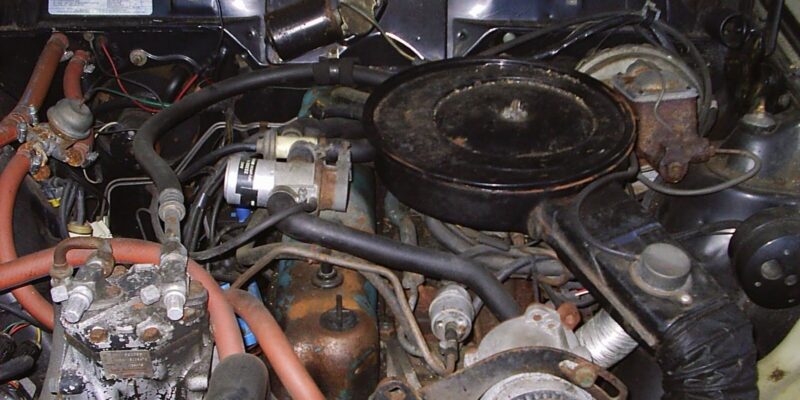
An engine bay is where a warranty dispute usually starts: with a part somebody installed. Photo: CZmarlin (Christopher Ziemnowicz), public domain via Wikimedia Commons
What does the Magnuson-Moss Warranty Act Actually Cover?
The Magnuson-Moss Warranty Act is the federal law that governs written warranties on consumer products. It does not force a seller to offer a warranty. What it does is regulate the warranty once one is offered: the terms have to be clear, and they have to be available to read before the sale. The Federal Trade Commission explains the details in its Businessperson’s Guide to Federal Warranty Law, and it is worth reading from the buyer’s side too.
One rule matters a great deal to anyone who swaps engines. Under 16 CFR 700.10, a warrantor cannot condition coverage on the consumer using a part or a service identified by brand name, unless that part or service is free. In 2018, FTC staff sent warning letters to companies whose warranties said the product had to be used only with their own parts. So a carmaker’s warranty is not wiped out merely because a used or aftermarket part went in somewhere in the repair. A claim for damage that the new part itself caused is a separate matter, though, and the warrantor can look at it on its merits. If you are unsure, ask in writing before the installation.
How do you read a used engine warranty before paying?
Read the warranty as a list of exclusions, and read the engine terms before the shipping terms. Importers that sell used Honda, Toyota or Subaru motors tend to write their terms around the internal engine: pistons, crankshaft, bearings, valve train, block, and head. One importer, JDM Engine Direct, publishes a warranty page (read in November 2026) that separates covered internal parts from external parts such as manifolds, sensors, the water pump and the starter. It also says shipping and labor are not part of the warranty and that a mechanic’s report is required for a claim.
That structure is common for a used engine warranty, and it is not unfair on its face. But it shapes what a warranty claim looks like for the installer and the customer. Four questions are worth answering before you pay:
- Who handles a warranty claim, and does the seller require a written report from a licensed mechanic?
- Does the warranty replace the engine, refund the price, or pay for labor? (Labor is often excluded.)
- What counts as misuse or negligence, such as running low on oil during the first few miles?
- What must you do after installation, such as changing fluids, replacing timing components or scheduling a check at a set mileage?
Which kinds of used engine warranty apply?
A used replacement engine carries two kinds of warranties, and they can stack. The first is the express warranty: whatever the seller wrote down. The second is the implied warranty of merchantability, an unwritten promise created by state law that the goods will do what goods of that type are supposed to do. The FTC guide notes that for used goods, this promise applies when the seller is a merchant who deals in such goods, and not when a private individual sells one item.
A merchant can usually disclaim implied warranties, but only in a certain way. New Jersey’s version of the Uniform Commercial Code, section 12A:2-316, says the language must mention merchantability and, if it is in writing, must be conspicuous. Expressions such as “as is” and “with all faults” also work. There is a catch for sellers, and a benefit for buyers: federal law bars a seller from disclaiming implied warranties on a product once the seller provides a written warranty for that product. Whether a particular state allows a seller to sell a product “as is” at all is a question for that state’s law.
What paperwork should you keep?
Keep more than you think you need. Statutes of limitations for breach of warranty are generally four years from purchase, according to the FTC guide, and the fact that something went wrong with the engine on day 10 is much easier to prove with records. For a used engine warranty claim, the useful set is short:
Keep the itemized invoice, showing the seller’s legal name, the date, the engine description, and any stated condition. Photograph the engine’s serial or stamped number on the block before it goes in the car, because a warranty claim can turn on whether the engine in the car is the engine that was sold. Keep the written warranty exactly as it read on the day of purchase (save the web page as a PDF). Save the shop’s repair order showing what was installed, what was replaced alongside it, and the date. Also keep the mechanic’s inspection notes from the first start.
Emails count. If a salesperson promised something about mileage or compatibility, a written message is evidence of an express warranty. A phone call is not.
Does a swap affect New Jersey inspection?
New Jersey requires an emissions inspection every two years for most passenger vehicles, with an exemption for new ones; the Motor Vehicle Commission describes it on nj.gov. The on-board diagnostics test reads the car’s computer to identify engine-related problems that may increase pollution. A swap can run into trouble there if it leaves a check engine light on or if the car’s computer has not completed its self-checks. Ask the shop how it will confirm that the car is ready. Check the MVC’s current rules before the work starts, since they change.
None of this is legal advice. State laws differ, and a dispute over a specific engine and a specific contract is a job for a lawyer or your state’s consumer protection office.
The short version
Read the warranty before the money moves, photograph the serial number, and file every receipt. A used engine can be a sound purchase, and the paperwork is what turns a bad situation into a solvable one.
What's your reaction?